Self-Driving Car Behavioral Cloning
A convolutional neural network that learns to steer autonomously from simulated driving footage.
I simplify complex data to create clear, reliable solutions that help businesses make smarter decisions
We put your ideas and thus your wishes in the form of a unique web project that inspires you and you customers.
Data is powerful, but it becomes truly valuable only when it’s transformed into actionable insights. By analyzing your data, I help you uncover trends, patterns, and key findings that can guide smarter decisions and drive business growth. Whether it’s identifying inefficiencies, uncovering market opportunities, or understanding customer behavior, valuable insights are the foundation for strategic planning and long-term success.
Valuable insights are actionable conclusions drawn from data that offer meaningful and relevant information for decision-making. These insights help businesses understand the reasons behind patterns, predict future outcomes, and make more informed decisions. They are derived from analyzing data and applying statistical and analytical techniques to uncover hidden opportunities, optimize processes, and identify trends that may not be immediately apparent.
In today’s fast-paced, data-driven world, the ability to extract valuable insights from data is crucial for staying competitive. Data alone is not enough—organizations need to translate that data into actionable information that drives business growth. Here’s why valuable insights are so important:
Valuable insights are not just about looking at raw data—they require deep analysis, the right tools, and expert interpretation. Here's how valuable insights are typically extracted from data:
There are various types of insights that can be drawn from data, each offering unique value for different aspects of your business:
Valuable insights help businesses stay ahead of the competition by providing clear guidance on where to focus efforts and resources. Here are several ways valuable insights can directly contribute to business success:
Don’t let your data go underutilized—unlock its full potential by transforming it into actionable insights. With a deeper understanding of your business, customers, and market, you can make smarter decisions that lead to measurable results. Whether it’s improving operations, driving growth, or enhancing customer experiences, valuable insights provide the clarity needed to take your business to the next level.
Forecasting is a powerful tool that enables businesses to predict future trends, behaviors, and outcomes based on historical data. With the right techniques and models, forecasting can provide invaluable insights that help businesses stay ahead of the curve, make informed decisions, and drive growth. Whether you're predicting market trends, customer demand, or sales performance, forecasting empowers you to plan effectively and take proactive actions.
Forecasting is the process of using historical data and statistical methods to predict future events or trends. It involves analyzing past performance and identifying patterns that can be used to project future outcomes. This approach is vital for decision-making, as it helps organizations anticipate challenges, capitalize on opportunities, and optimize resource allocation.
Accurate forecasting is crucial for businesses to stay competitive in today’s fast-paced world. It provides a roadmap for strategic planning and decision-making, ensuring that businesses are prepared for the future. With the right forecast, you can align your resources effectively, reduce risks, and optimize your operations. Whether you’re forecasting sales, market demand, or financial performance, accurate predictions allow businesses to be proactive rather than reactive.
There are several techniques used in forecasting, each with its strengths depending on the data and objectives. Common methods include:
The forecasting process begins with gathering and preparing data. This data is then analyzed using various techniques, such as time series or regression analysis, to identify patterns and trends. Once the model is built, it can be used to predict future outcomes. These predictions are continuously refined as new data becomes available, improving their accuracy and reliability.
Forecasting offers several key benefits that can greatly enhance your business strategy:
Forecasting can be applied across various industries to achieve strategic objectives. Here are some common use cases:
Forecasting doesn’t just predict the future; it enables businesses to take proactive action. With a clear understanding of future trends, businesses can adjust their strategies, allocate resources efficiently, and make informed decisions that position them for success. Whether it's adjusting marketing campaigns, optimizing operations, or planning financial strategies, forecasting provides the foundation for effective action.
By leveraging advanced forecasting techniques, businesses can not only anticipate what’s coming but also shape their future with confidence. With accurate predictions, you’ll be empowered to make smarter, more strategic decisions that drive growth and success.
Advanced analysis is the key to unlocking the true value of your data. By applying sophisticated techniques and state-of-the-art tools, we dive deep into your data to uncover insights that aren’t immediately obvious. This process can lead to groundbreaking discoveries, better decision-making, and a competitive edge in your market.
Advanced analysis goes beyond basic descriptive statistics. It uses complex algorithms, machine learning models, and data mining techniques to explore your data in ways that simple reports and visualizations cannot. This analysis uncovers hidden patterns, correlations, and trends that can have a profound impact on your business.
We begin with a comprehensive exploration of your data, identifying key features and variables that are essential for deep analysis. This step helps to understand the structure, quality, and potential of your data, ensuring that no critical information is overlooked. By using advanced exploratory data analysis (EDA) techniques, we can spot anomalies, outliers, and hidden relationships that might not be apparent at first glance.
Using powerful statistical models and machine learning algorithms, we identify complex patterns and trends within your data. Whether it’s customer behavior, operational efficiencies, or market shifts, these insights allow you to make data-driven decisions with confidence. This deeper understanding can help you uncover new opportunities, optimize existing processes, and predict future outcomes.
One of the key aspects of advanced analysis is predictive modeling. By creating models that forecast future trends, behaviors, or outcomes, we help you anticipate challenges before they arise. These forecasts enable proactive decision-making, allowing you to stay ahead of the curve and adjust strategies as needed to remain competitive in a fast-moving market.
Advanced analysis doesn’t just tell you what happened in the past; it tells you why it happened and what actions to take next. With clear, actionable insights, you can make informed decisions that drive growth, improve operational efficiency, and enhance customer satisfaction. These insights are often visualized in interactive dashboards or detailed reports, making them easy to share and understand at all levels of your organization.
Advanced analysis leads to tangible results. Whether you’re looking to optimize your supply chain, predict customer behavior, or explore new revenue streams, the insights derived from advanced analysis can transform the way you do business. It empowers you to act strategically, make data-backed decisions, and drive real change in your organization.
By leveraging advanced analysis, you unlock the full potential of your data. With powerful tools and expert techniques, I help you uncover hidden insights that can propel your business forward, providing the clarity and direction needed for long-term success.
Reports and dashboards are essential tools for presenting data in an easily digestible format. They transform complex datasets into clear, actionable insights that help decision-makers understand trends, monitor performance, and take informed actions. Whether you're presenting business performance, tracking KPIs, or analyzing customer behavior, reports and dashboards help turn raw data into valuable, accessible information.
Reports and dashboards are data visualization tools that provide insights into key metrics, trends, and performance indicators. Reports are typically static, detailed documents that focus on specific data points, while dashboards are dynamic and interactive, allowing users to monitor real-time data and track multiple metrics at once. Both tools help organizations make sense of their data by presenting it in an intuitive format that is easy to understand and act upon.
Reports and dashboards allow businesses to quickly assess their current performance, identify areas for improvement, and make data-driven decisions. With these tools, stakeholders at every level can gain insights into critical aspects of the business without having to dive deep into raw data. They serve as the bridge between complex analytics and actionable insights, ensuring that key data points are communicated effectively to the right people at the right time.
Effective reports provide clear, concise, and actionable information. Some key features include:
Dashboards provide a real-time overview of business performance and metrics. Some essential features of an effective dashboard include:
While reports and dashboards serve different purposes, they work best when used together. Reports offer in-depth analysis and detailed insights that help users understand the "why" behind data trends. Dashboards, on the other hand, provide real-time visibility into key metrics and enable users to monitor performance on an ongoing basis. Together, these tools offer a comprehensive approach to data analysis, helping businesses make informed decisions based on both historical insights and real-time performance.
Reports and dashboards offer several advantages for businesses:
Reports and dashboards can be applied in a variety of business contexts to achieve strategic goals:
With the right reports and dashboards, you can unlock the full potential of your data and make smarter, more informed decisions. Whether you need a comprehensive report to share with stakeholders or an interactive dashboard for real-time performance monitoring, I can help create customized solutions tailored to your specific needs. Empower your team with the tools they need to succeed and turn your data into actionable insights that drive business growth.
Applied machine-learning and data-mining work — from autonomous driving to healthcare and road-safety analytics. Hover a card for detail, click to explore.
A convolutional neural network that learns to steer autonomously from simulated driving footage.
Statistical and machine-learning analysis of patient records to surface the factors that drive survival.
A CRISP-DM study of Westminster collision data to reveal where, when and why accidents cluster.
Live London accident data modeled to predict severity against weather and road conditions.
Browse every datavyn web scraper and data tool — e-commerce, social media, real estate, jobs, finance and more. Search, filter by category, and jump straight in.
Explore all scrapersThis project uses a Convolutional Neural Network (CNN) to autonomously drive a car in a simulated environment. The primary obto autonomous driving
T without human input. By leveraging deep learning techniques and computer vision, this project explores how neural networks can enhance the capabilities of self-driving cars.
In the world of autonomous driving, the challenge lies in enabling vehicles to interpret their surroundings accurately and make real-time decisions. This project begins with the collection of driving data in a simulated environment, where a car is manually driven around the track while capturing camera images and corresponding steering angles. The data collected serves as the foundation for training a neural network model. As the project progresses, various techniques are employed to ensure the model learns effectively and can generalize well to new scenarios. The story unfolds through a series of iterations, where data preprocessing, model design, and training strategies are refined to enhance the car's driving performance.
We gathered extensive driving data from the simulator by manually controlling the car, recording images and steering angles from multiple camera perspectives (center, left, and right).
The collected data underwent preprocessing to improve its quality. This included resizing images, normalizing pixel values, and cropping irrelevant sections to focus on the road ahead.
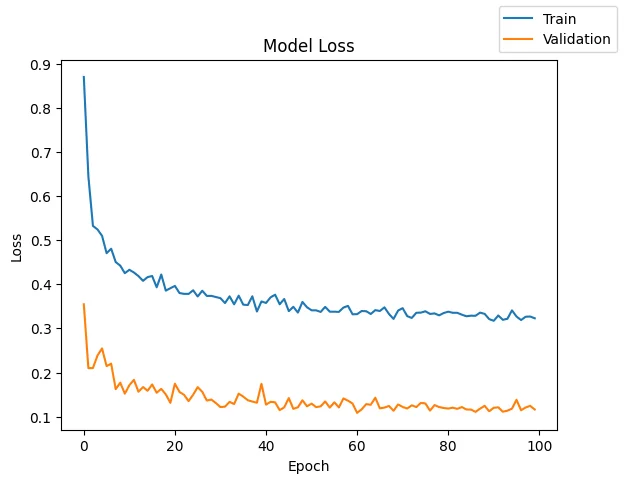
The model was trained using the Mean Squared Error (MSE) loss function and the Adam optimizer, optimizing the network to reduce prediction errors and improve performance.
After training, the model's performance was evaluated using a test dataset to assess its ability to generalize to new driving scenarios. We employed data augmentation techniques and hyperparameter tuning to refine the model further.
A data-driven analysis of heart failure patient characteristics to uncover factors influencing mortality, using statistical insights and machine learning for improved healthcare outcomes.
This project dives deep into understanding the factors influencing mortality in patients diagnosed with heart failure. By analyzing demographic, clinical, and lifestyle data, we uncover patterns and predictors of survival. Through statistical analysis and machine learning techniques, this work offers valuable insights for healthcare professionals, helping them to better assess patient risk and improve outcomes.
Our journey began with a question: What drives mortality in heart failure patients, and how can we predict it? As data enthusiasts, we realized the potential of leveraging medical data to answer critical healthcare questions. With a blend of curiosity and determination, we embarked on this project to explore the hidden patterns within patient data. By connecting data to impactful insights, we aim to contribute to the ongoing efforts to save lives and improve patient care.
We explored the dataset, identifying key variables such as age, medical history, and comorbidities, and examined their impact on patient outcomes.
Ensured data quality through cleaning, handling missing values, and feature engineering.
Conducted exploratory data analysis (EDA) using advanced visualization tools to uncover meaningful relationships.
Leveraged machine learning algorithms to predict mortality, optimizing models for accuracy and interpretability.Translated findings into actionable insights to aid healthcare providers in risk assessment and decision-making.
pThis project focuses on analyzing road traffic accidents in Westminster, London, using the CRISP-DM model for data mining.
This project focuses on analyzing road traffic accidents in Westminster, London, using the CRISP-DM model for data mining. It aims to uncover the key factors influencing road safety and their economic impact on the local community. Through a dataset of 8,855 records spanning 2005-2010, statistical models, regression analysis, and clustering algorithms, the study offers critical insights into the causes of accidents and their severity, informing better traffic management and policy decisions.
In this study, we explore road traffic accidents in Westminster to identify patterns, correlations, and underlying factors that contribute to accidents and their severity. Using a rich dataset that spans several years, we analyze variables like weather conditions, road surface types, and law enforcement presence. The goal is not only to understand the contributing factors but also to provide actionable insights that can help local authorities reduce accidents and their economic impacts on businesses and the broader community.
Our approach follows the CRISP-DM (Cross-Industry Standard Process for Data Mining) methodology, ensuring a structured, repeatable process for analyzing the data. We begin with data exploration and pre-processing to clean and prepare the dataset.
Then, statistical analyses and regression models help us identify correlations and significant factors affecting accident severity.
We also apply machine learning techniques, such as k-means clustering, to segment accident data and gain deeper insights.
The results reveal key drivers of traffic accidents and offer recommendations for improving road safety and mitigating economic losses.
This project focuses on real-time accident data in London, utilizing data collection, cleaning, and preprocessing techniques to uncover patterns in accident severity and weather conditions.
This project focuses on real-time accident data in London, utilizing data collection, cleaning, and preprocessing techniques to uncover patterns in accident severity and weather conditions. Through Exploratory Data Analysis (EDA), feature engineering, and advanced machine learning models like decision trees, the study provides insights into factors influencing accident severity, including latitude, weather, speed limits, and casualties.
In this study, we aim to enhance road safety in London by analyzing real-time traffic accident data. By leveraging data science tools and techniques, we investigate the factors that influence the severity of accidents, the correlation between weather and latitudinal factors, and the role of speed limits in accident outcomes. The ultimate goal is to develop predictive models that can help anticipate accident severity and weather conditions, enabling better traffic management and policy decisions to reduce accidents and casualties.
We apply a structured data science approach, starting with the collection, cleaning, and preprocessing of real-time accident data. Exploratory Data Analysis (EDA) helps us identify key patterns, while feature engineering optimizes the predictive power of our models.
We conduct a correlation analysis to explore relationships between accident severity, weather conditions, and other factors. Cluster analysis groups accident data to reveal common characteristics, while decision trees are used to predict accident severity and weather.
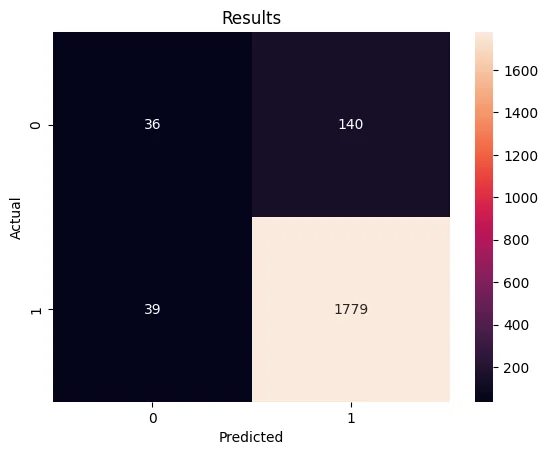
Model evaluation shows strong performance with high precision (90.53%), recall (88.29%), and accuracy (88%), ensuring reliable predictions and actionable insights.
We put your ideas and thus your wishes in the form of a unique web project that inspires you and you customers.
Empowering people in new a digital journey with my super services